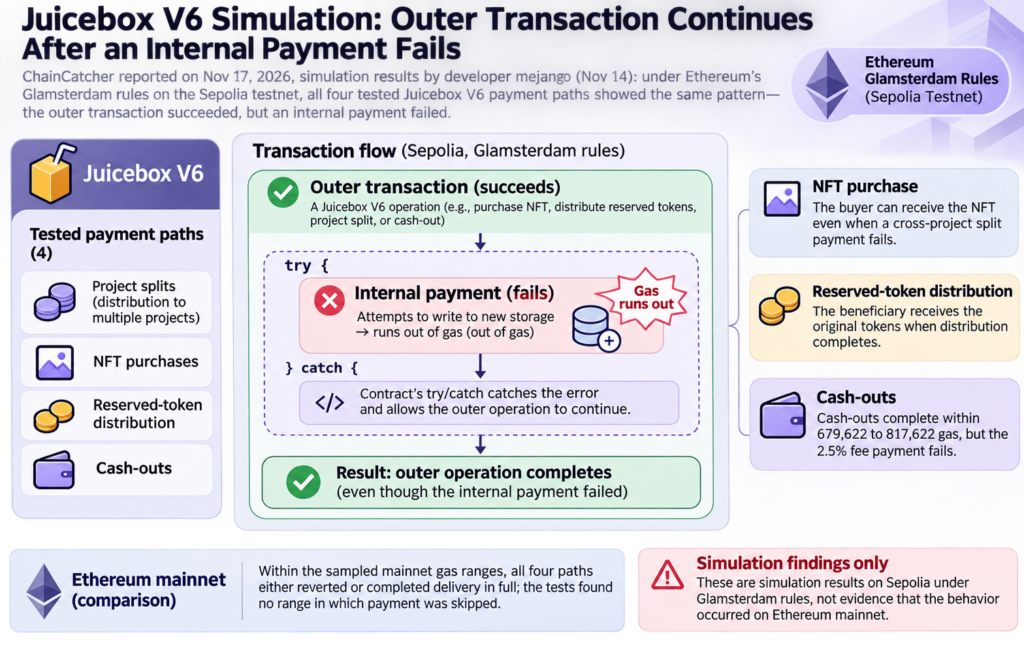
In a report published on November 17, 2026, ChainCatcher described simulation results posted by developer mejango on November 14. Under Ethereum’s Glamsterdam rules on the Sepolia testnet, all four tested Juicebox V6 payment paths showed the same pattern: the outer transaction succeeded, but an internal payment failed. The paths covered project splits, NFT purchases, reserved-token distribution and cash-outs.
The distinction matters for the recipient of a payment. In the NFT test, a buyer could receive the NFT even when a cross-project split payment failed. In the reserved-token test, the beneficiary received the original tokens when distribution completed. Cash-outs completed within a range of 679,622 to 817,622 gas, but the 2.5% fee payment failed.
Mejango attributed the behavior to gas running out when an internal payment attempted to write to new storage. The contract’s try/catch then caught the error and allowed the outer operation to continue. By contrast, within the sampled Ethereum mainnet gas ranges, all four paths either reverted or completed delivery in full; the tests found no range in which payment was skipped. These are simulation findings, not evidence that the behavior occurred on mainnet.