
A payment can be technically secure and still be awkward at a checkout. In an article published on November 11, 2026, writer ross.wei used buying a coffee to frame Tacit Chain’s goal: a payment-focused zk-rollup designed to give merchants a quick indication of payment while keeping transaction details private. The article describes the project’s design and makes performance claims; it does not provide an independent checkout test.

Why the payment route matters
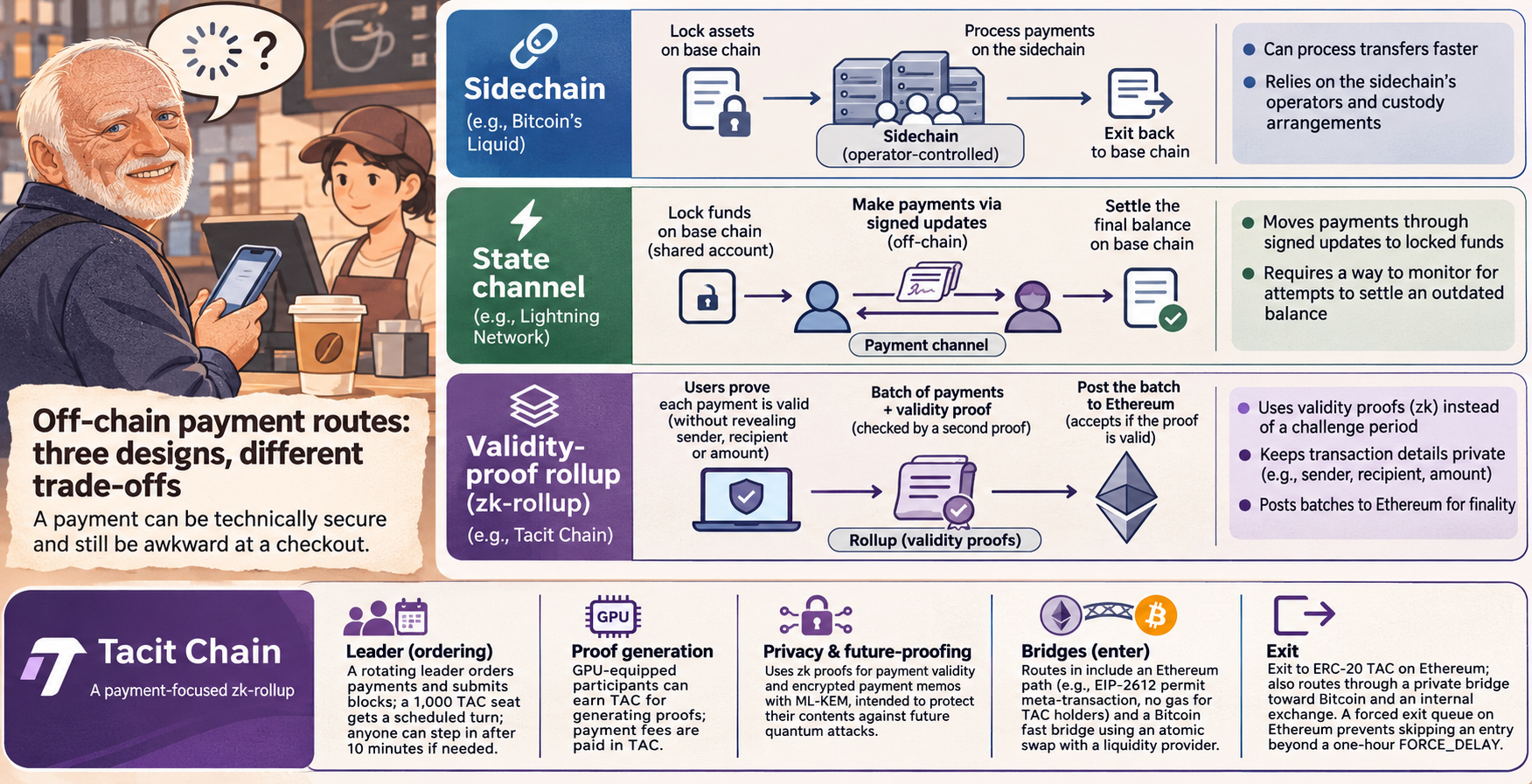
The article contrasts three ways to move payments off a base chain. A sidechain can process transfers faster, but users rely on its operators and custody arrangements; it cites Bitcoin’s Liquid as an example. A state channel, such as those used by the Lightning Network, moves payments through signed updates to locked funds, but requires a way to monitor for attempts to settle an outdated balance. An optimistic rollup posts batches to Ethereum and allows time to challenge errors, leaving users with an exit wait that the article says is often about a week.

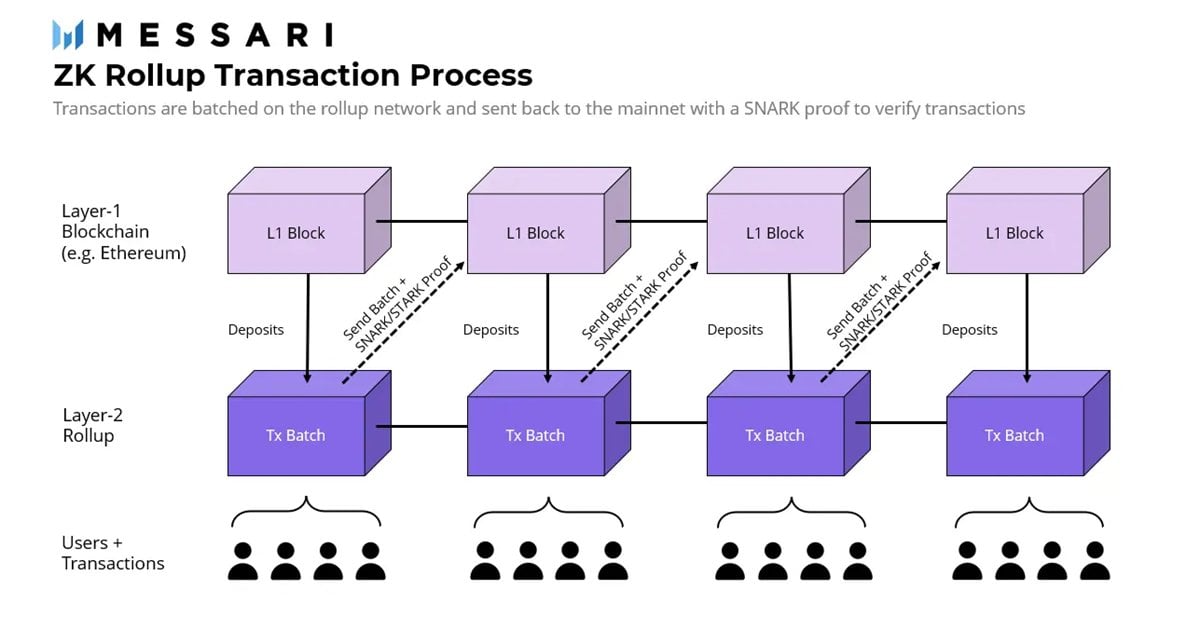
Tacit Chain instead uses validity proofs. According to the article, a user’s device proves that a payment is valid without revealing the sender, recipient or amount to the rollup verifier. A second proof checks the processed batch before Ethereum accepts it. A rotating leader orders payments and submits blocks to the TacitBlocks.sol contract. The article says holders of a 1,000 TAC seat can take a scheduled turn; if the leader does not submit, anyone can step in after 10 minutes. GPU-equipped participants can earn TAC for generating proofs, while payment fees are paid in TAC.
Entering, paying and leaving
The described routes into Tacit include Ethereum and Bitcoin bridges. The article says a TAC holder can enter from Ethereum without paying gas through an EIP-2612 permit meta-transaction; it also describes a Bitcoin fast bridge using an atomic swap with a liquidity provider. These are distinct routes, not a claim that every deposit has the same trust or liquidity requirements.
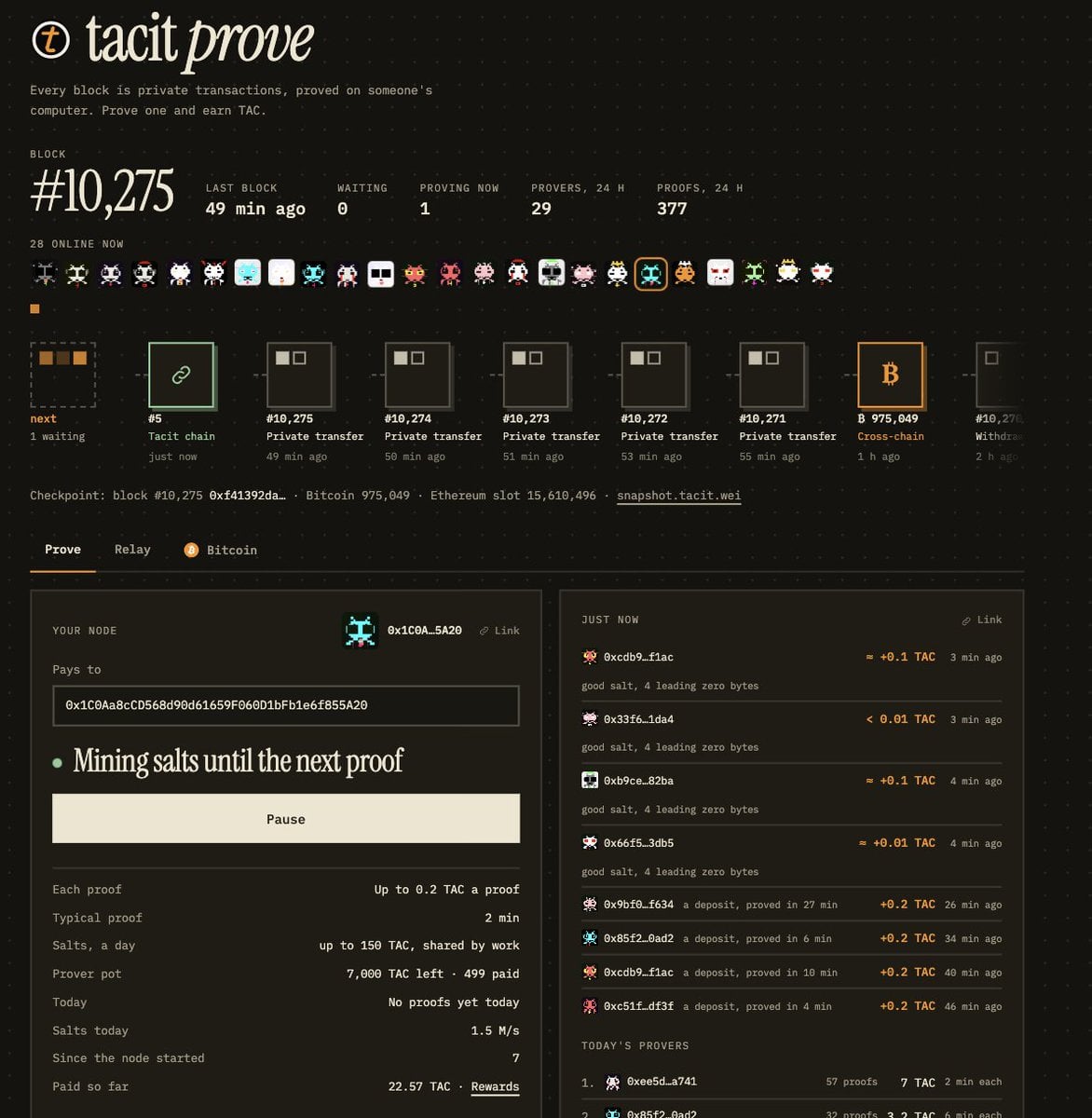
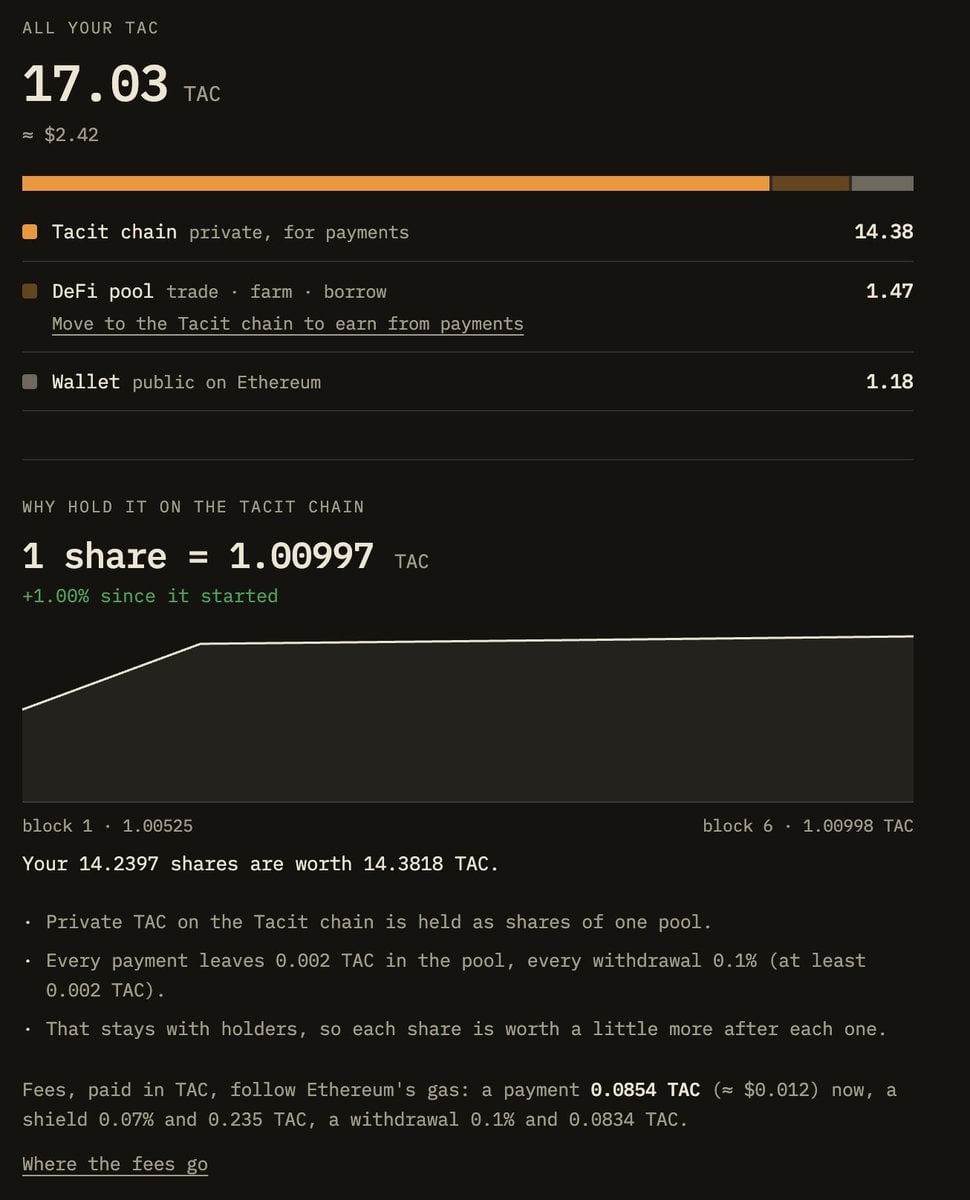
For a merchant, the article claims a payment can appear when it is sent and reach Ethereum finality in about one minute. It presents confirmation nearer 30 seconds as a potential improvement, not a current guarantee. Users can exit to ERC-20 TAC on Ethereum. The article also describes routes through a private bridge toward Bitcoin and an internal exchange for users who do not want to keep TAC. For forced exits, it says an Ethereum queue prevents a leader from skipping an entry beyond a one-hour FORCE_DELAY without the block reverting.
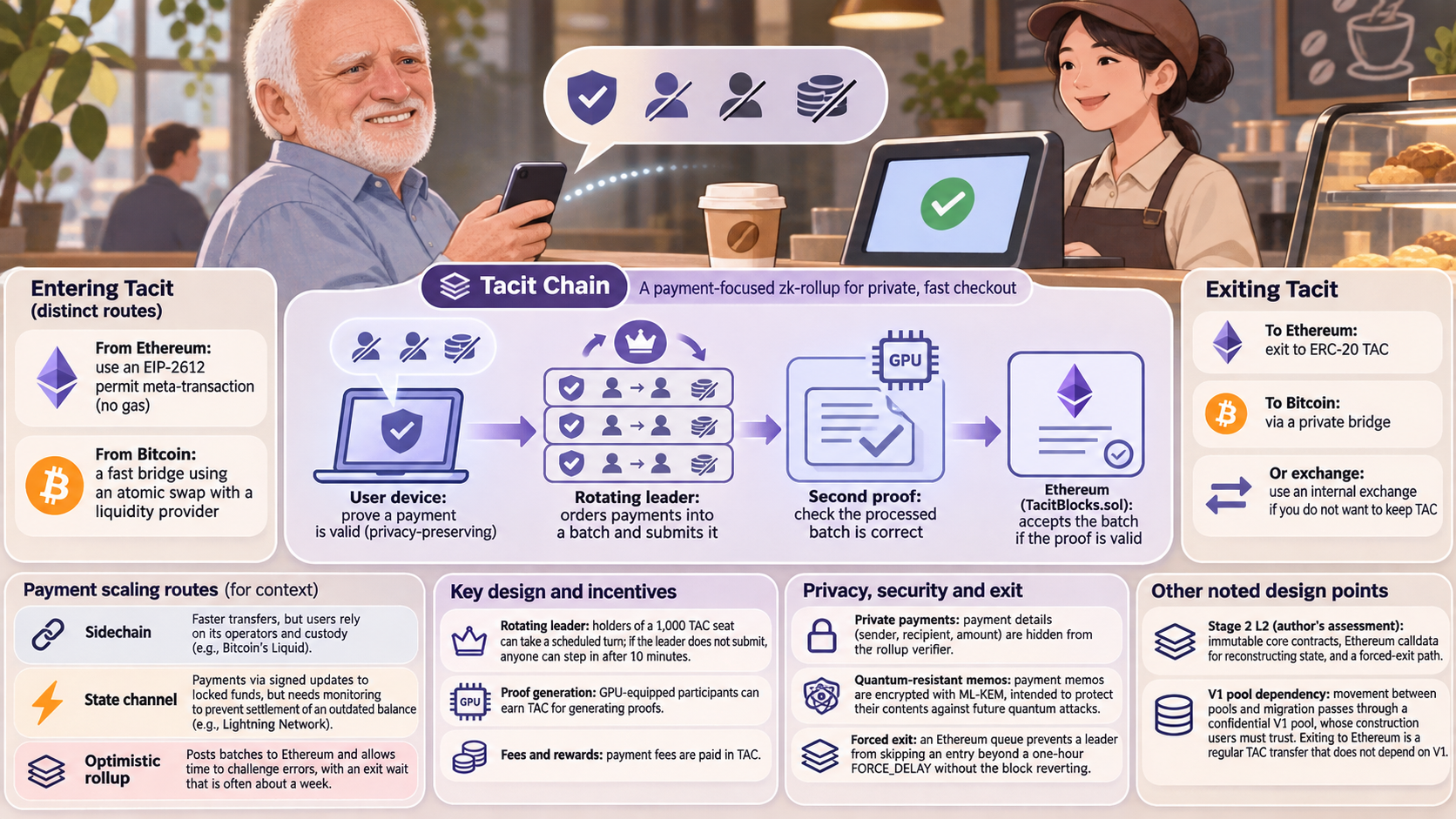
The privacy design includes encrypted payment memos using ML-KEM, intended to protect their contents against future quantum attacks. The author also argues that Tacit meets a “Stage 2” L2 standard, citing immutable core contracts, Ethereum calldata for reconstructing state and the forced-exit path. That is the author’s assessment. The article identifies a separate dependency: movement between pools and migration passes through a confidential V1 pool, whose construction users must trust, although an exit to Ethereum is described as a regular TAC transfer that does not depend on V1.
For someone paying online, the central trade-off is therefore not just speed. The described journey involves acquiring or bridging assets, paying in TAC and choosing an exit route, alongside the project’s claimed privacy protections. The article says lower costs, additional assets and opt-in migration are intended directions; they should not be mistaken for independently verified payment outcomes.