Originally reported November 14, 2026, at 22:01 (UTC+08:00).
OpenAI’s ChatGPT Wallet gives its AI agents a way to complete online purchases with eligible American Express, Mastercard and Visa cards. Despite the name, it does not hold cryptocurrency for checkout. It uses a payment token so the agent can submit a purchase without accessing the customer’s actual card number.
The feature works in dots, OpenAI’s always-on assistants, rather than ordinary ChatGPT chats. A customer saves an eligible card, then reviews an order and approves the payment with a security check such as a fingerprint or Face ID. The card network creates a token with substitute card details, which the agent submits through the store’s existing checkout. According to OpenAI, applicable card rewards and dispute protections remain available. Every purchase currently requires user approval.
At the time of the report, access was limited to ChatGPT Pro subscribers aged 18 or older in the United States with eligible U.S.-issued cards. OpenAI said it planned to allow advance authorization within spending limits or specified categories, but had not announced a launch date. It also warned that stores might block shopping agents or flag legitimate Wallet purchases as fraud. Under OpenAI’s terms, merchants remain responsible for deliveries and returns, while users generally need to take billing disputes to their card issuers.
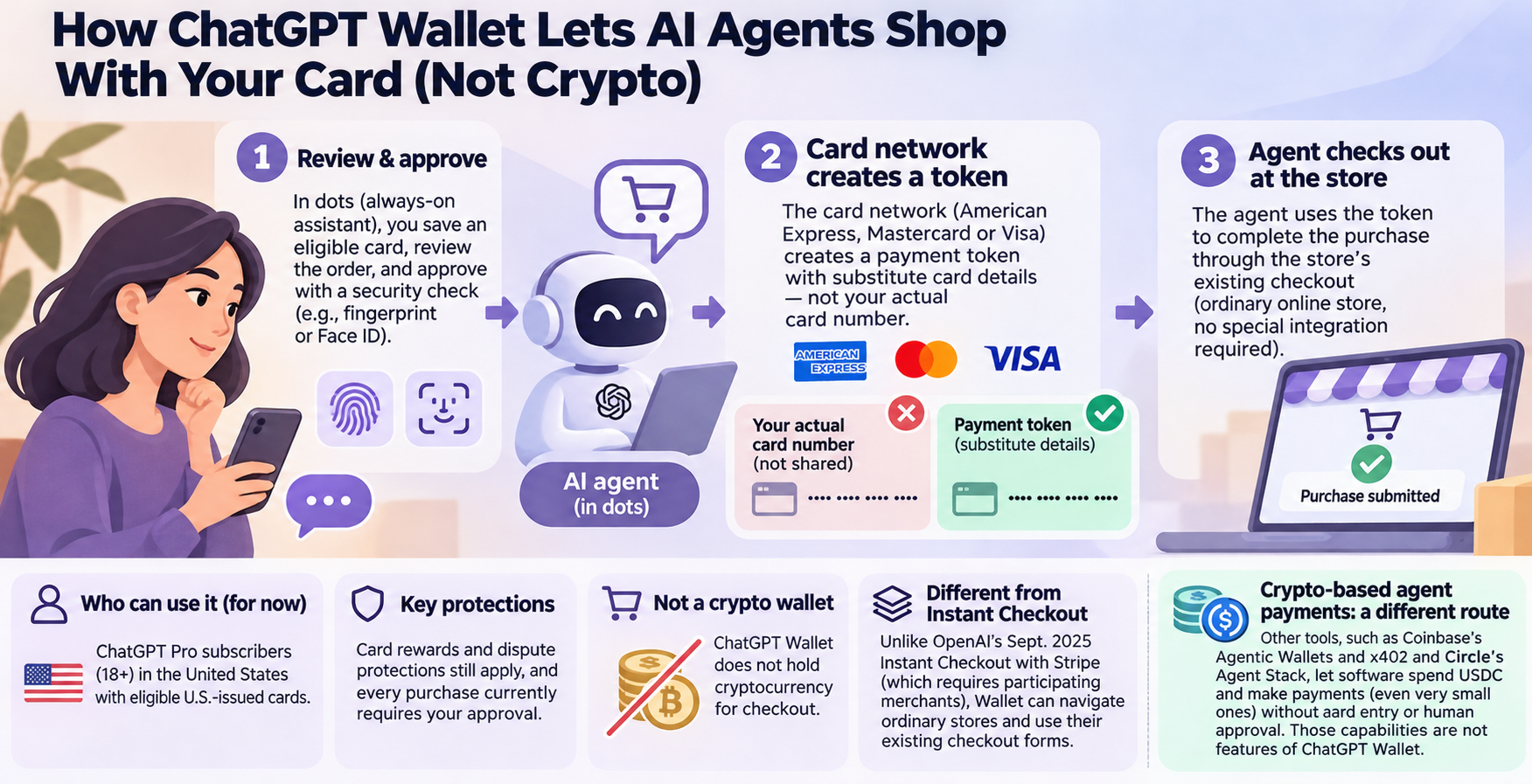
Wallet differs from OpenAI’s September 2025 Instant Checkout with Stripe: rather than requiring a participating merchant’s special integration, agents can navigate ordinary stores and use their existing checkout forms. OpenAI had also introduced business profiles three days before the Wallet launch, allowing companies to update product information and connect with potential customers through ChatGPT. Google’s Universal Commerce Protocol, introduced in January, pursues a competing approach to connecting shopping agents, retailers, payment providers and post-purchase services.
Crypto-based agent payments take a different route. Coinbase’s Agentic Wallets, launched in February, are primarily developer infrastructure: software can spend USDC, trade tokens and pay for services within preset limits. Coinbase’s x402 protocol supports payments for data or computing within a web request, often in USDC, without card entry or human approval for each payment. Circle’s Agent Stack, launched in May, includes stablecoin wallets and tools for payments as small as $0.000001. Those capabilities are not features of ChatGPT Wallet.
The scale of actual agent-driven crypto commerce remains uncertain. In September, TRM Labs estimated that agents accounted for 0.6% to 7.5% of filtered x402 commerce by value; its models could not conclusively distinguish agents from scripts.
Source: decrypt.co (originally published 2026-11-14 22:01 UTC+8)