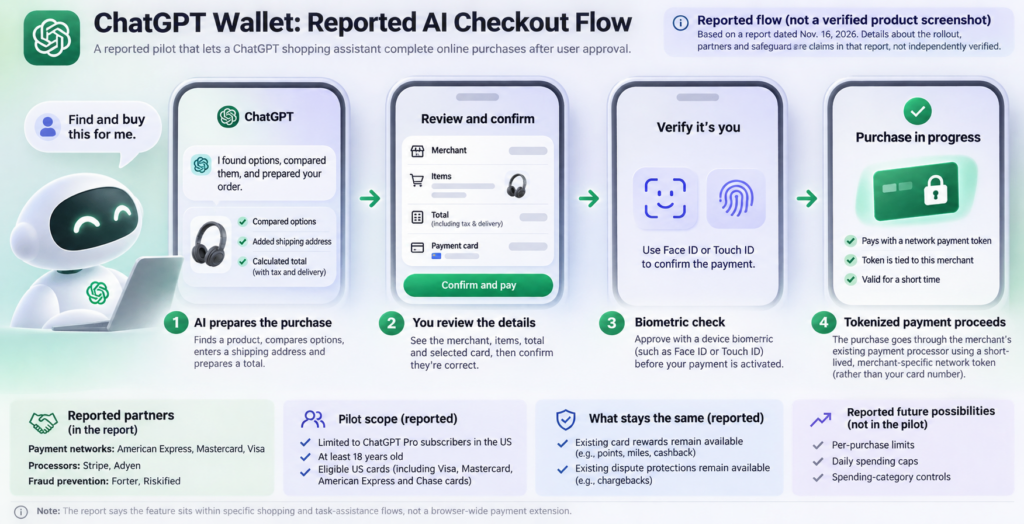
A report published on November 16, 2026, says OpenAI has introduced a limited ChatGPT Wallet pilot intended to let an AI shopping assistant complete online purchases after the user approves payment. The report’s descriptions of the rollout, partnerships and safeguards are claims in that report, not independently verified details.
What the user would do
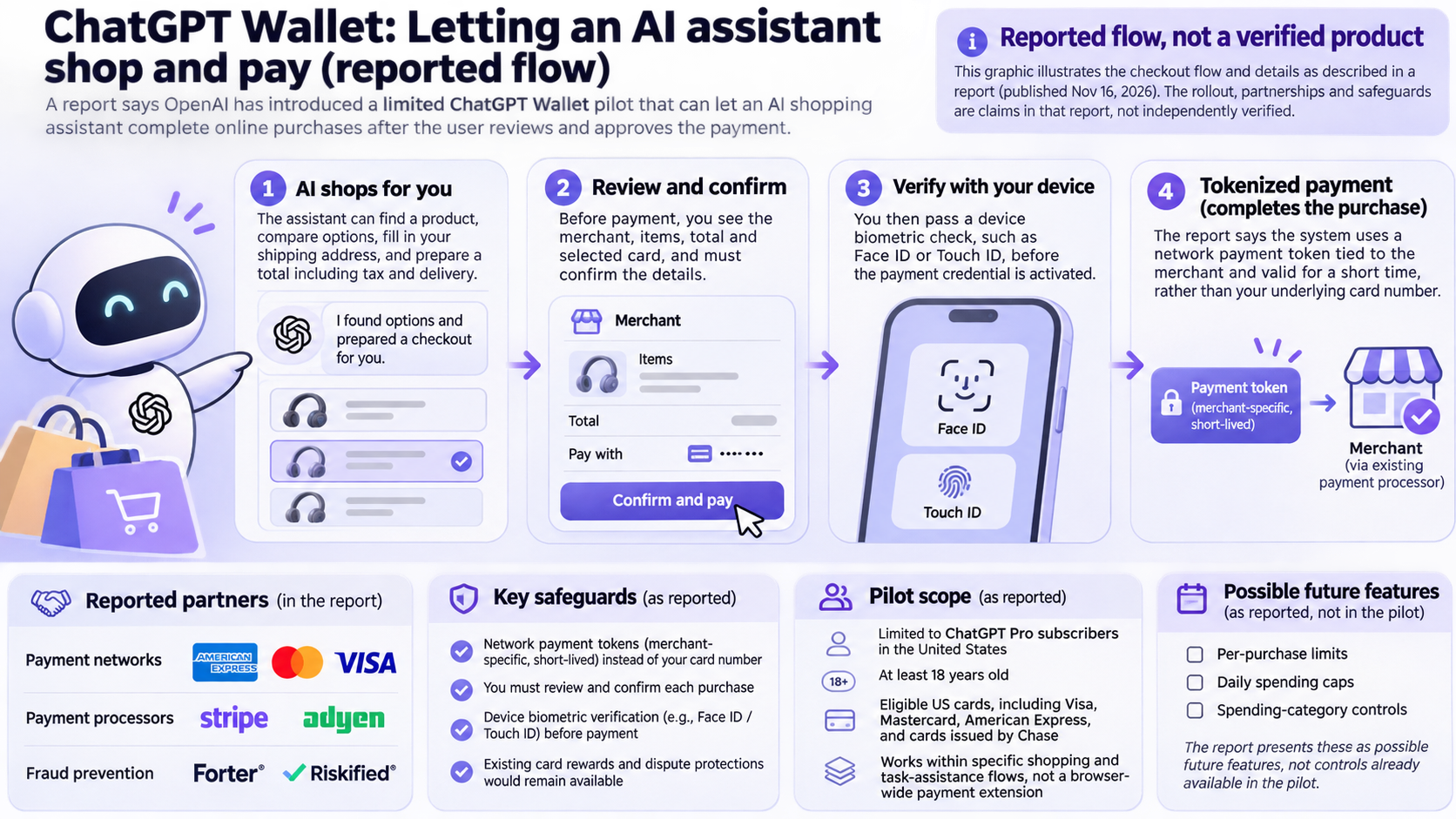
In the checkout flow described, the assistant could find a product, compare options, enter a shipping address and prepare a total including tax and delivery. Before payment, the user would see the merchant, items, total and selected card. The report says the user must confirm those details and then pass a device biometric check, such as Face ID or Touch ID, before the payment credential is activated. Finding an item would therefore not, on its own, authorize a charge.
The report says the system uses network payment tokens tied to a merchant and valid for a short time, rather than giving the assistant or merchant the user’s underlying card number. It names American Express, Mastercard and Visa as payment-network partners, and says transactions would still pass through merchants’ existing payment processors. It also names Stripe and Adyen as processing partners and Forter and Riskified as fraud-prevention partners. Those arrangements and the claimed limits on card-data exposure are not independently established by the supplied material.
Pilot limits
According to the report, initial access is limited to ChatGPT Pro subscribers in the United States who are at least 18 and hold eligible US cards, including cards on the Visa, Mastercard and American Express networks and cards issued by Chase. It says the feature sits within specific shopping and task-assistance flows, not a browser-wide payment extension.
The report says existing card rewards and dispute protections would remain available. It presents per-purchase limits, daily caps and spending-category controls as possible future features—not controls already available in the pilot.