
A November 23, 2026 report from the Anti-Corruption Data Collective (ACDC) found that election prediction markets were broadly as accurate as established forecasting models in the 2026 U.S. midterms. Its separate analysis of Polymarket trading found that profits were heavily concentrated among a small share of wallets. The findings concern election contracts, not crypto payments or wallet use generally.
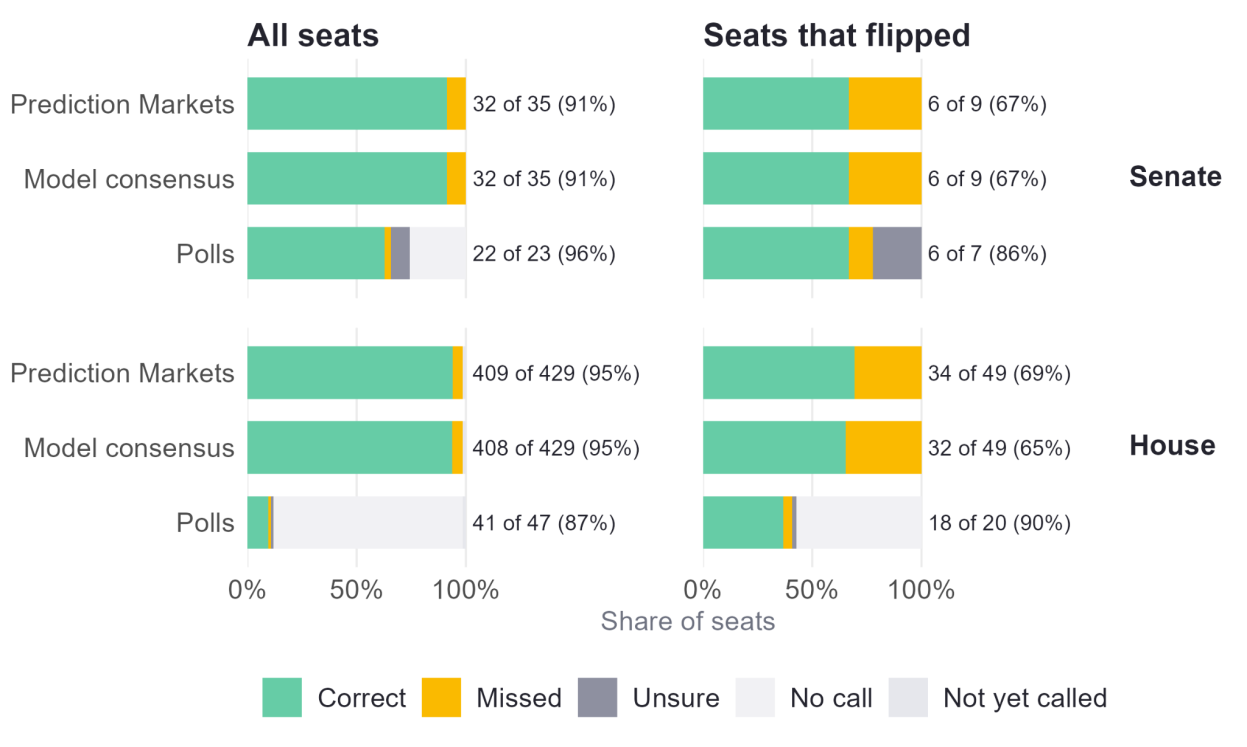
Accurate overall, less decisive in close races
ACDC compared Kalshi, Polymarket and Polymarket US prices with an equally weighted average of six election forecasts. It counted a prediction as correct if the eventual winner’s contract cost more than 50 cents 24 hours before the first polling station opened—the same threshold used in Kalshi’s own research.
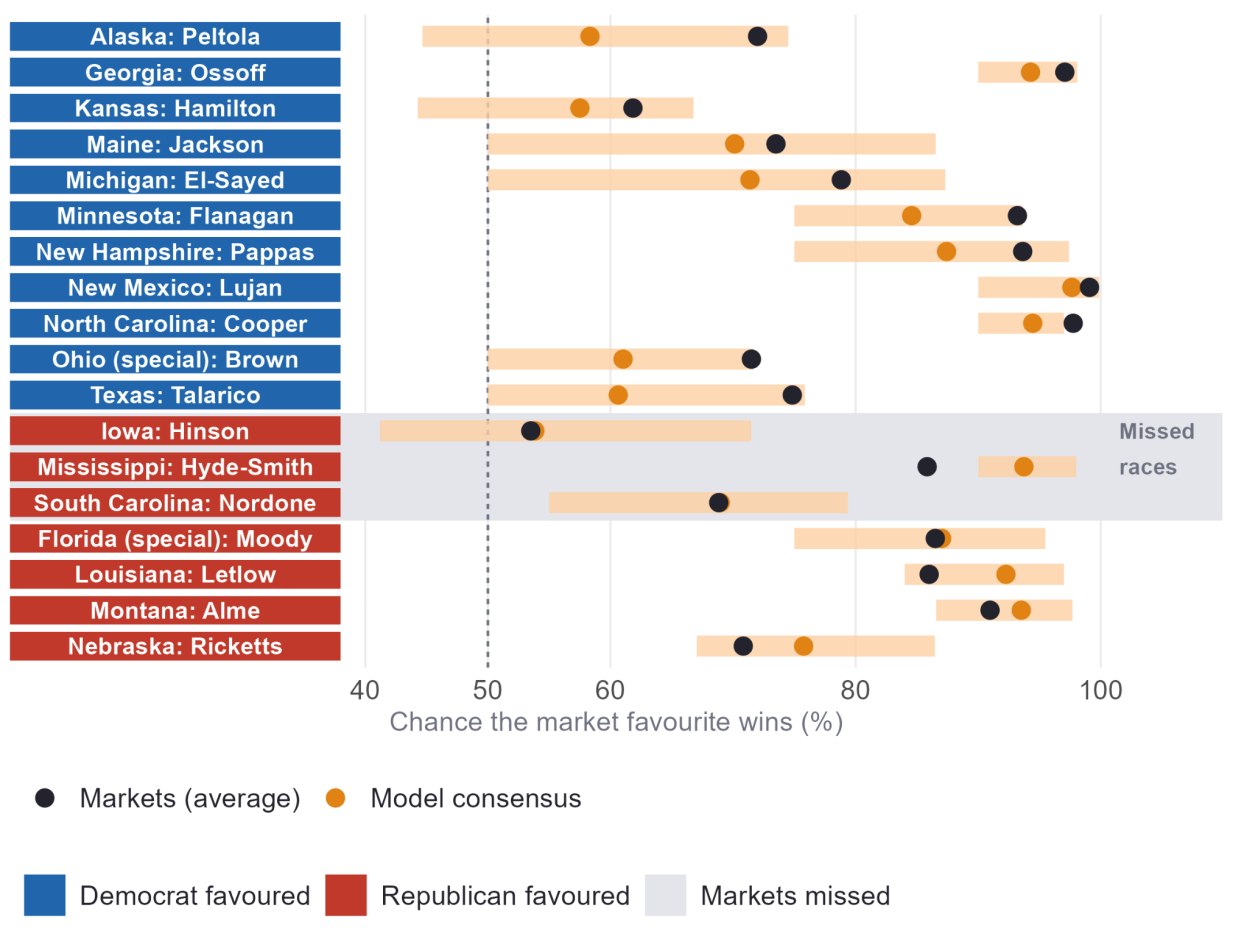
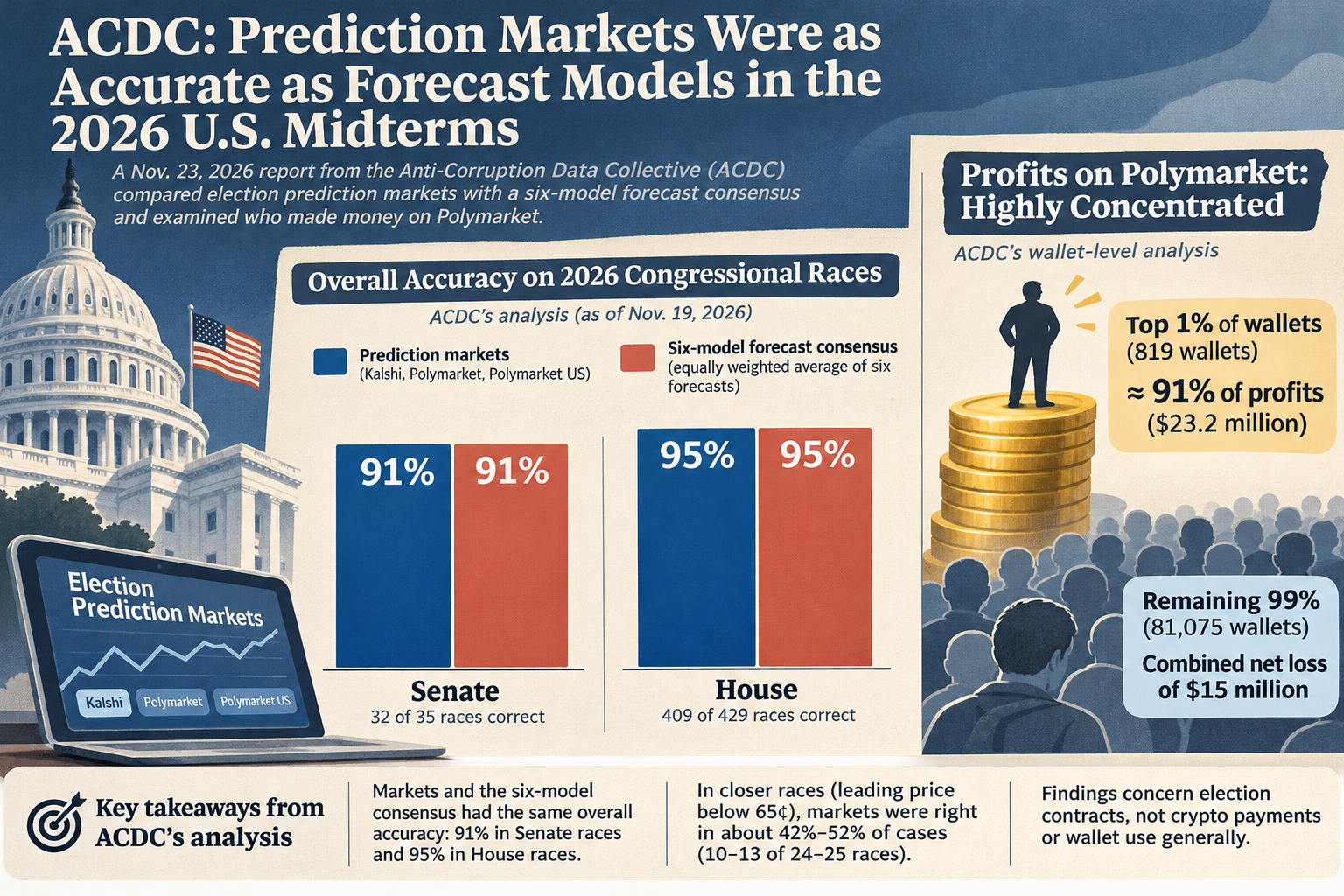
As of November 19, results had been determined in 464 of 470 congressional races. The markets correctly picked 32 of 35 Senate races, or 91%, and 409 of 429 House races, or 95%. The six-model average reached the same percentages. According to ACDC, markets were right where the model consensus was wrong in three races; the reverse occurred in two.
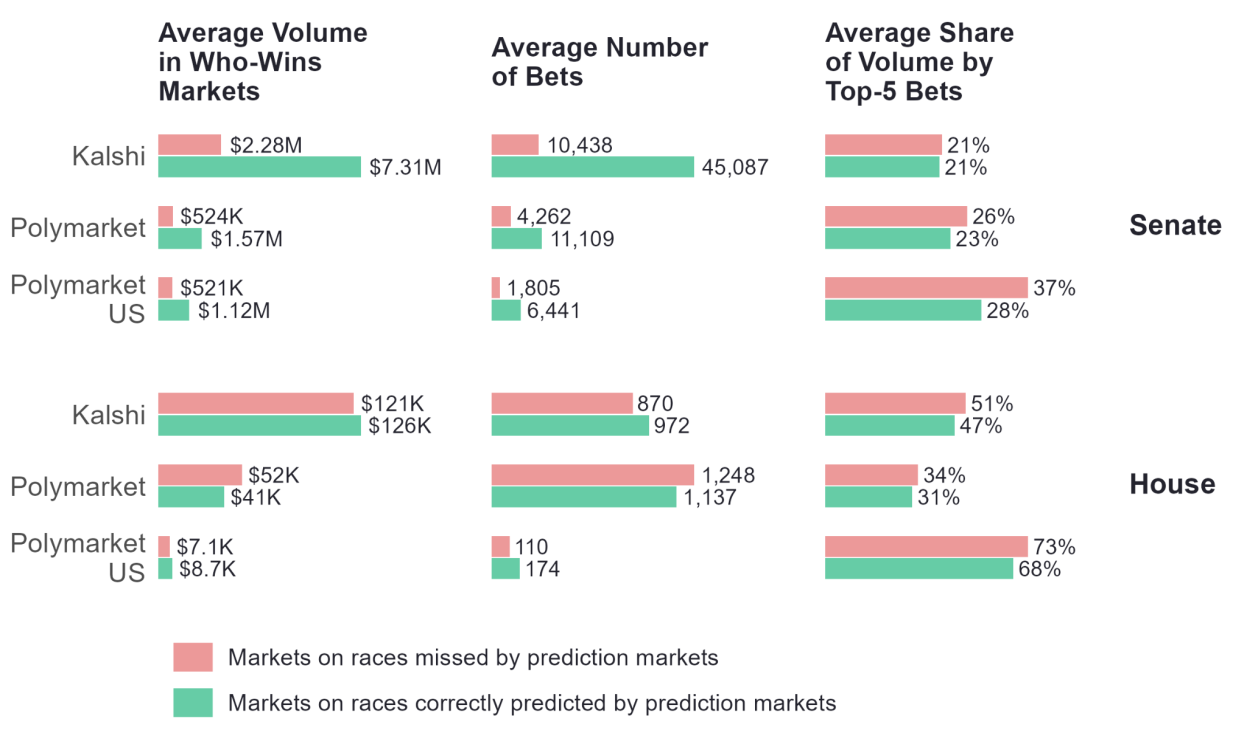
The headline accuracy masks a harder test. Among races with a leading contract priced below 65 cents, Kalshi called 10 of 24 correctly, Polymarket US 11 of 25, and Polymarket 13 of 25. Contracts priced above 85 cents missed only twice. ACDC also found that markets which called races incorrectly tended to have less trading and fewer bets, though that association does not establish why their prices were wrong.
The 50-cent test measures whether a market favored the eventual winner, not whether its quoted probability was well calibrated. The source also notes a counterpoint to the close-race finding: in the small set of seats that changed party control, market predictions performed slightly better than the model consensus. Neither result alone supports a sweeping claim about all difficult races.
Who made money on Polymarket?
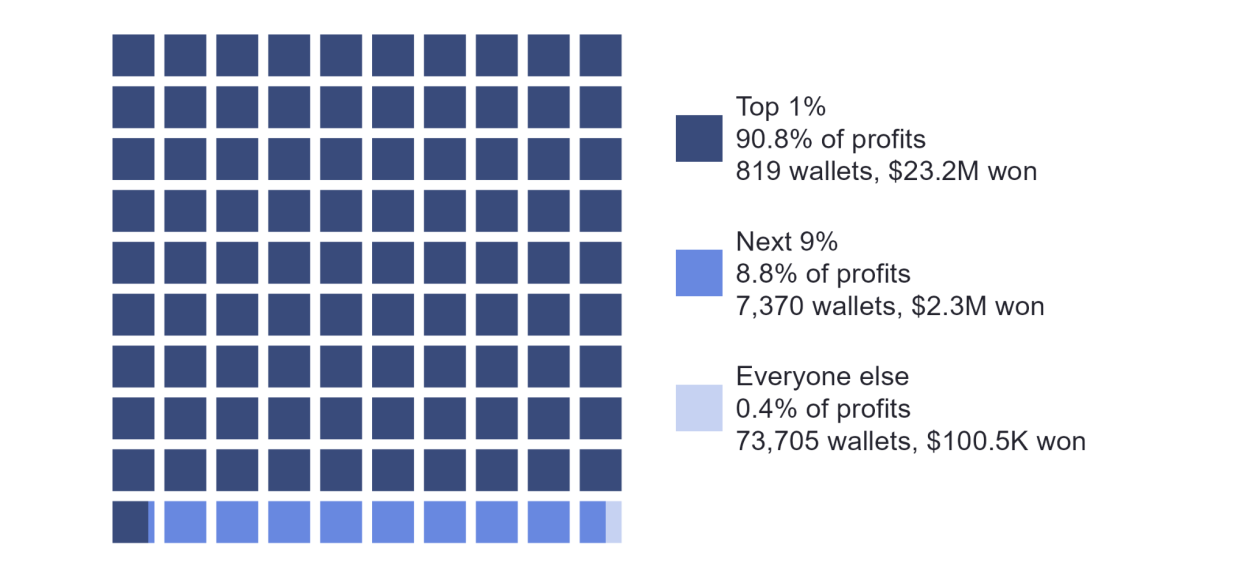
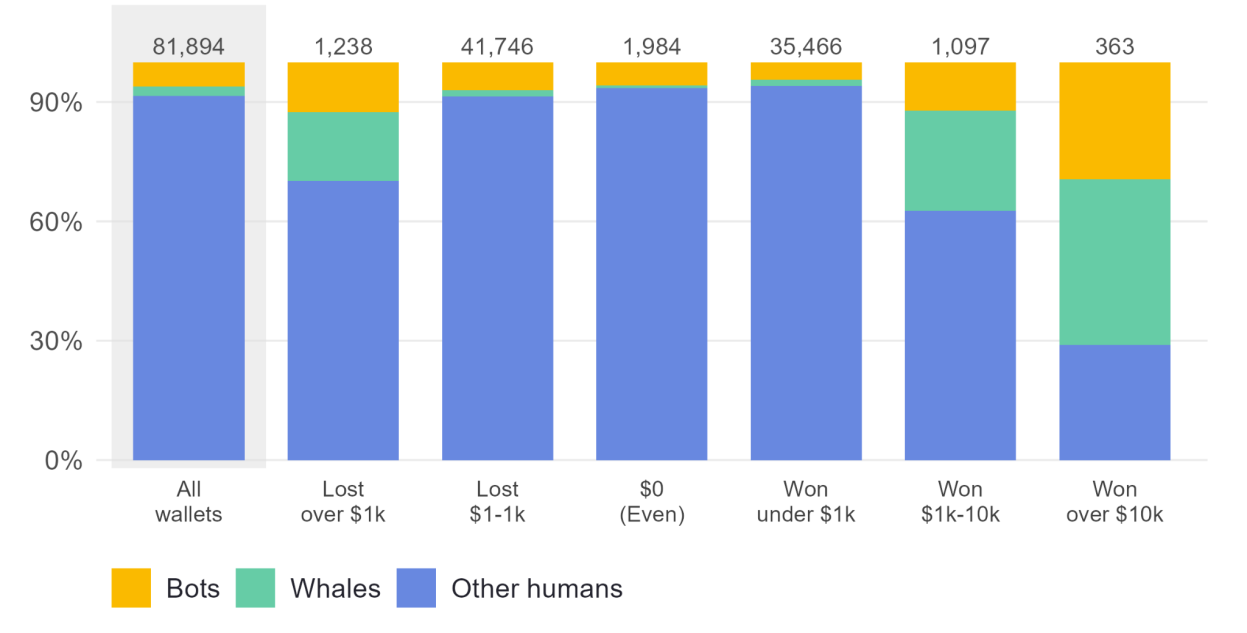
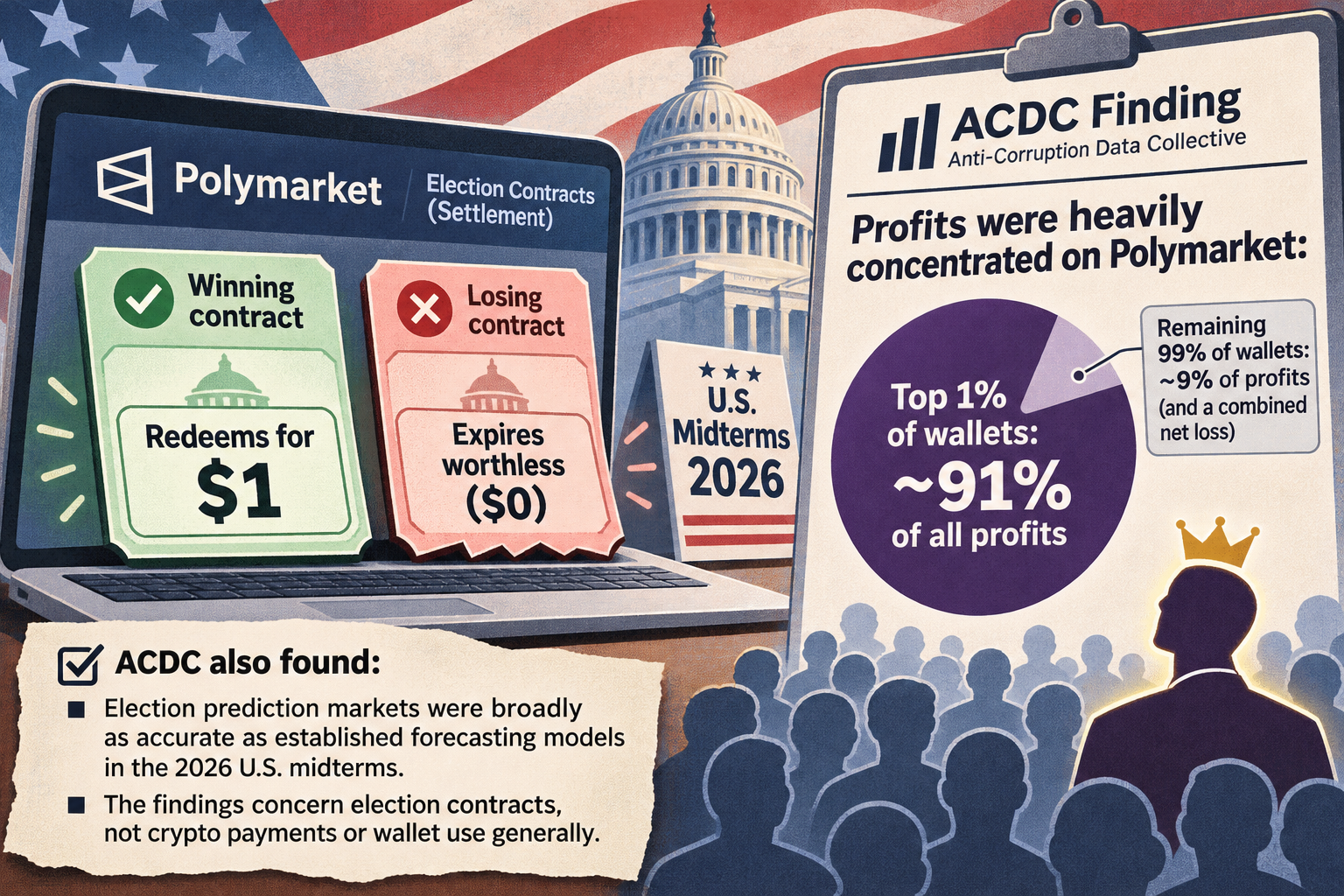
Wallet-level profit and loss figures were available only for Polymarket. ACDC examined 5,946 settled congressional-election markets involving 81,894 distinct wallets. It found that 42,984 wallets lost money. The top 1%—819 wallets—accounted for about 91% of all profits, or $23.2 million, while the remaining 99% had a combined net loss of $15 million. ACDC cautioned that some positions had not been formally closed when it calculated those figures, so the net loss may be understated.
A wallet is not necessarily a person. Using its own definitions of high-volume “whale” wallets and consistently active “bot” wallets, ACDC classified 6,824 wallets in those two groups. They represented 8% of wallets but 45% of trading volume and 72% of profits. The report says other users made money from trading before markets closed but lost most at settlement, when contracts backing losing outcomes became worthless. A winning contract held to settlement paid $1.
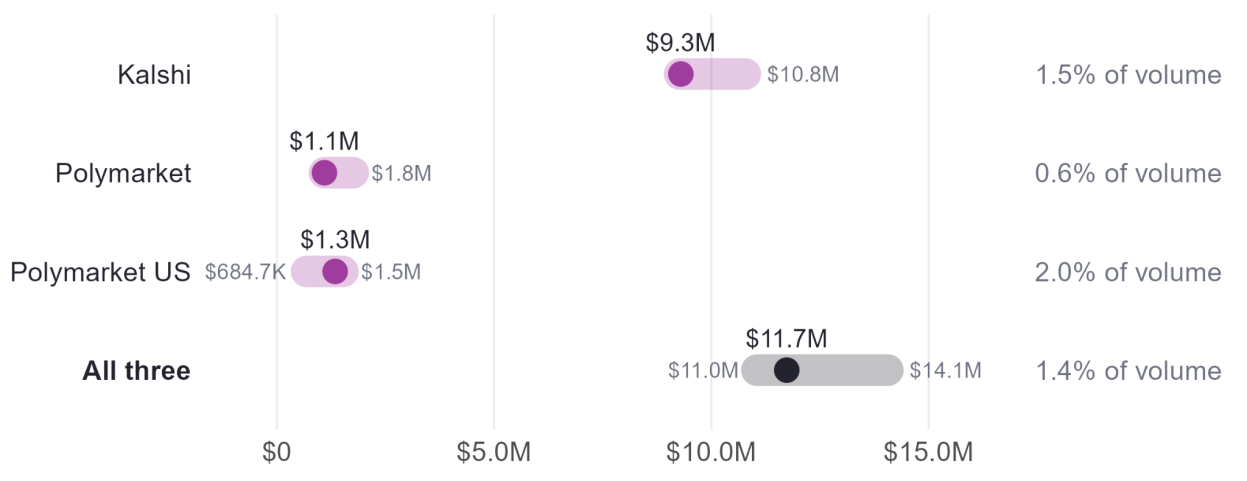
Across the three platforms, ACDC recorded $854.4 million in congressional-seat trading volume and estimated platform fees at $11 million to $14.1 million, with $11.7 million its best estimate. Those fees are an estimate, not an audited total. Trading losses went to counterparties; they were not themselves platform fee revenue.
ACDC is a nonprofit focused on corruption and illicit finance. It advocates returning prediction-market oversight to U.S. states, and its co-founder David Szakonyi has called for Congress to ban election betting. That policy position is relevant context for its interpretation of the data; the report does not describe such a ban as enacted law.