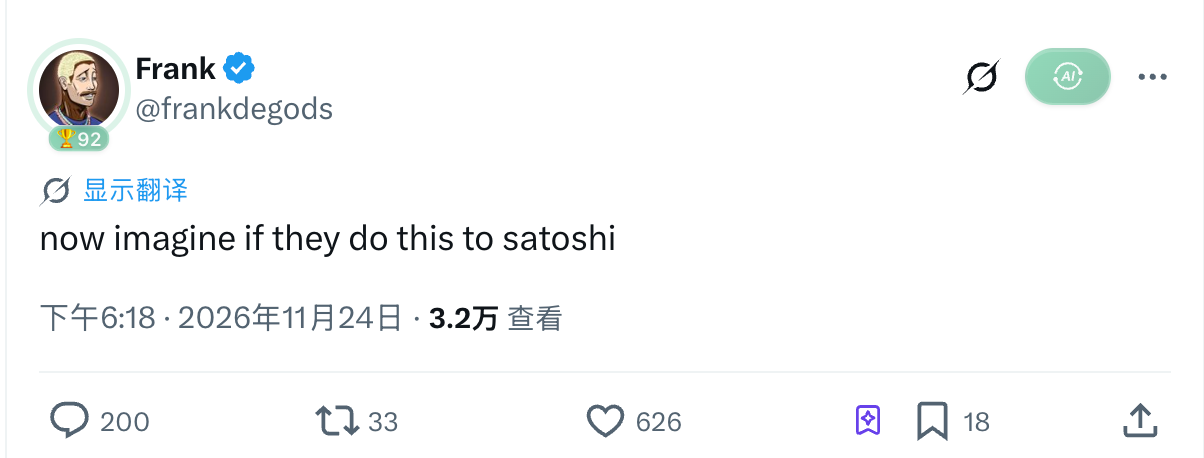
A wallet linked to Solana trader Ansem sold about 70.8 million ANSEM tokens in three batches for roughly 17,600 SOL, worth about $1.25 million at the time, according to on-chain monitoring cited on November 24, 2026. Early monitoring put ANSEM’s decline at about 60% in one hour during the sell-off. The trades show what the wallet sold, but not who controlled it at the time.
Lookonchain later reported that roughly 2.15 million USDC moved to an address beginning with 0xAC33 on Arbitrum. That transfer included proceeds from sales of several memecoins. It was not a second estimate of the $1.25 million raised from selling ANSEM alone.
Why the wallet’s activity is disputed
Ansem said his Pump wallet had been compromised. He initially suspected unauthorized access to a Bullpen account into which he had previously imported a Solana private key. He did not confirm how an attacker had gained access.
On-chain analyst MLM (@mlmabc) questioned that explanation. About an hour before the selling began, a wallet MLM said he had labeled as Ansem’s a year earlier sent funds to the address that later received the proceeds. The selling wallet also retained about 16.7 million ANSEM after the three sales. Neither the earlier transfer nor the remaining balance establishes who authorized the trades. As of the November 24 report, a sale by Ansem and unauthorized use of the key remained competing explanations.
For wallet users, the distinction between connecting an app and importing a private key matters: Ansem’s account concerned a key he said he had imported, not simply a wallet connection. Keeping long-term holdings under a separate, offline key can limit what is exposed if a daily-use wallet is compromised. Checking transaction details on a hardware wallet and requiring multiple signers can reduce other operational risks. None of those measures makes the underlying signature algorithm resistant to quantum computing.
What the comparison with Satoshi does—and doesn’t—imply
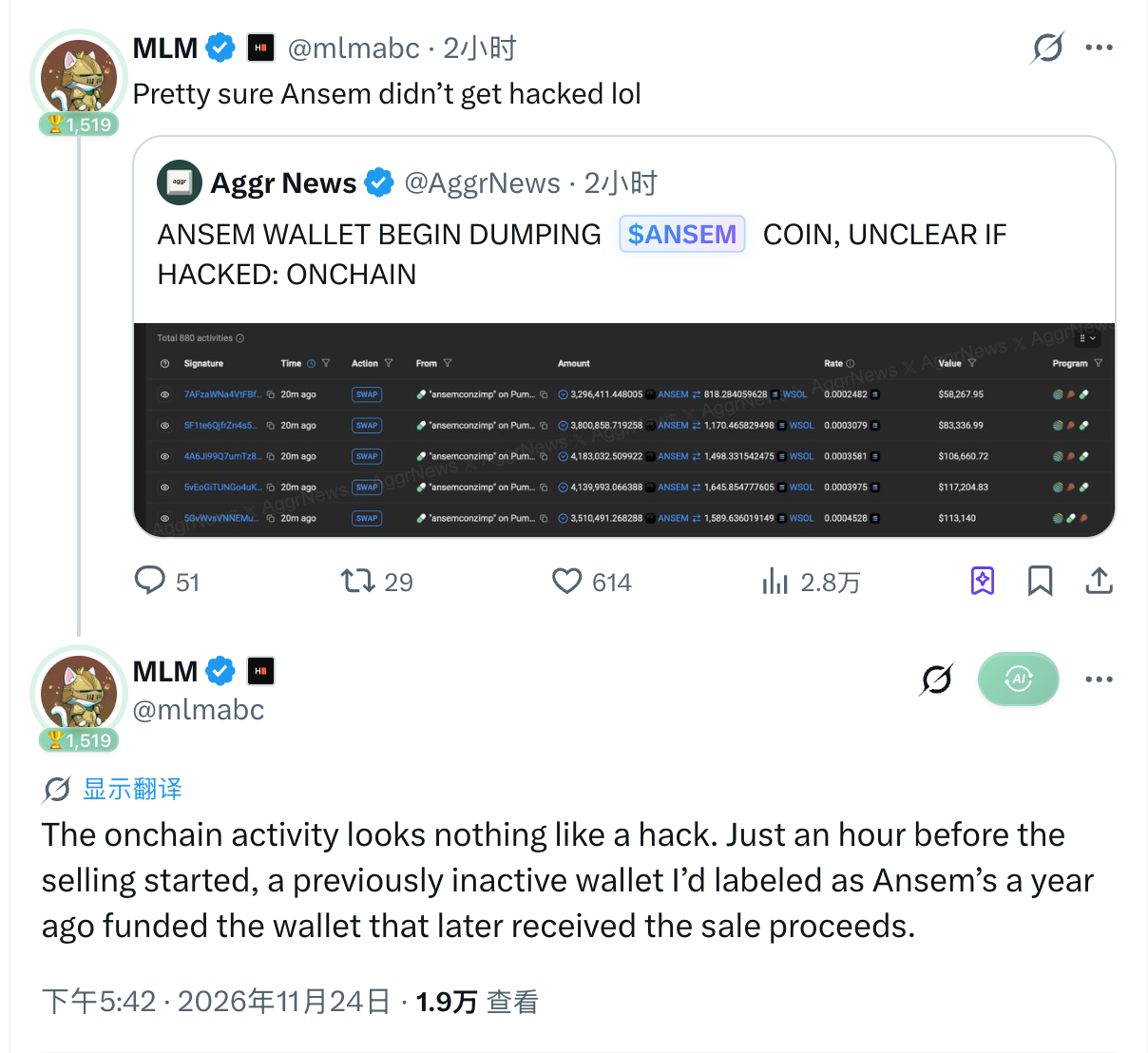
Frank DeGods raised a hypothetical: what if someone could move the early bitcoin thought to belong to Satoshi Nakamoto? The parallel is about the effect on a market, not the cause. If previously dormant coins were sold, buyers and sellers would face that supply regardless of who signed the transactions. There was no claim that those bitcoin had moved or that quantum computers had recovered their keys.
In an earlier interview, Justin Sun said advances in AI algorithms and concerns about quantum computing had made him more cautious about bitcoin’s long-term prospects. His concern was that some dormant holdings might not be able to migrate to a new security scheme and could eventually come onto the market if their cryptography were compromised. He also said he had sold none of his core bitcoin holdings.
Ethereum researcher Justin Drake has called for planning what he termed “Bunker Mode”: an orderly migration to addresses where a hash still conceals the public key. That was a proposal, not an activated change. Its usefulness depends on the address type:
- For Bitcoin’s P2PKH and P2WPKH addresses, an unspent output generally reveals only a hash, provided the public key has not been exposed elsewhere. Spending reveals the public key.
- Early P2PK outputs contain the public key directly. Taproot (P2TR) outputs also expose an output public key, even before the coins are spent.
Avoiding address reuse can therefore reduce public-key exposure in some cases. As Google Quantum AI’s research distinguishes, reducing exposure is not the same as migrating to post-quantum cryptography. A fresh address alone is not a universal safeguard.